

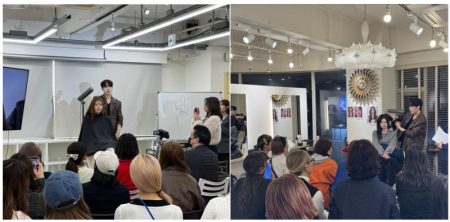
For global brands looking for a standing hair dryer manufacturer, the product brief needs to cover much more than motor speed or wattage. The BAILE BL-1108 Standing Hair Dryer combines hands-free use, an adjustable structure, controlled airflow, and an OEM/ODM-ready platform for importers, product developers, and private-label buyers.
Most hair dryer conversations begin with a motor figure or a promise about drying time. For a standing model, those are only part of the picture. A product expected to dry hair without being held must also work with the user’s posture, height, routine, living space, and control preferences.
The opportunity is not simply to place a conventional dryer on a stand. It is to create a hands-free personal-care appliance that is structurally stable, comfortable to use, straightforward to control, testable in production, and ready for market-specific engineering from the start.
Hands-Free Standing Hair Dryer Design
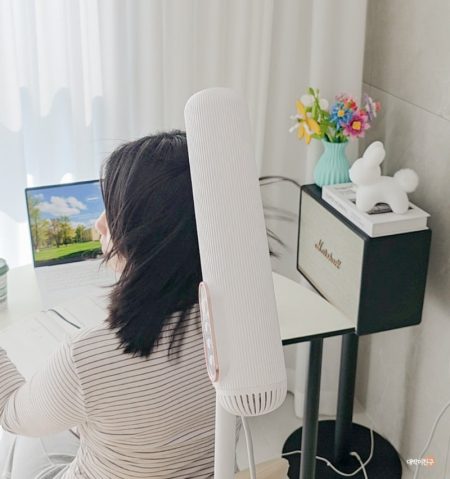
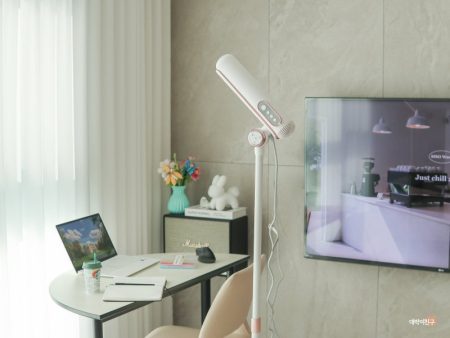
The BL-1108 is designed around a height-adjustable standing structure and a 180-degree adjustable air-delivery head. Those features matter because people do not dry their hair in one fixed posture. They may be seated at a dressing table, standing after a shower, or using the product during a grooming routine that requires both hands.
From a product-development perspective, “hands-free” is not a single feature. It is a system requirement. The base, upright structure, adjustment mechanism, air-delivery angle, cable routing, center of gravity, and product footprint all need to work together. A stable unit with useful adjustment is more meaningful than a visually impressive stand that only works at one height or one angle.
This is also where ergonomics belongs in the product brief. OSHA notes that repetitive work and awkward postures can contribute to muscle fatigue and musculoskeletal risk in workplace settings. A home appliance is not a workplace intervention, but the underlying principle is relevant: product design should adapt to the person and the task, rather than make the person adapt to the product.
BLDC Airflow, Temperature, and Noise Control
The BAILE BL-1108 is built around a high-efficiency 110,000 RPM BLDC motor and a triple-airflow layout. The purpose of that configuration is to deliver air across a broader area while retaining a product format that can operate without being held.
For a B2B buyer, however, motor RPM and outlet count should be the beginning of the conversation, not the end. Drying performance depends on the interaction of motor output, impeller design, air-channel geometry, outlet layout, heat control, noise, vibration, and the distance between the product and the user’s hair.
That is why BAILE approaches high-speed BLDC hair dryer development as an airflow system. Its engineering capability covers high-speed brushless motor solutions, air-channel structure, housing structure, temperature-control systems, and industrial design. Depending on the project, the factory can evaluate air speed, airflow, outlet temperature, temperature rise, noise, vibration, and operating consistency rather than relying on an isolated headline figure.
This distinction matters when a product moves from a sample to repeated production. A configuration that looks compelling in a single demonstration still needs repeatable airflow and thermal behaviour across the production run.
Controls for a Hands-Free Hair Dryer
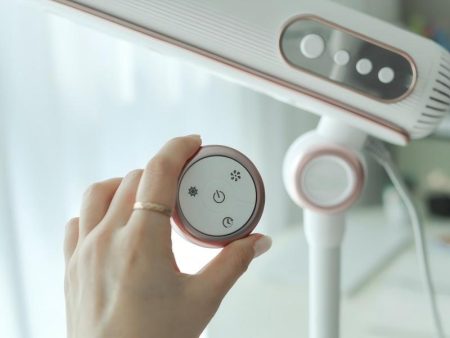
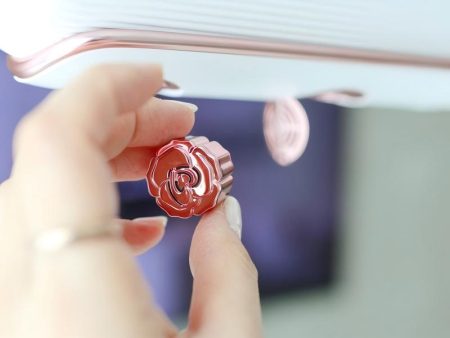
The BL-1108 configuration combines four temperature settings with three airflow settings, giving users a practical range of operating choices. It also uses a magnetic wireless remote so controls can remain accessible without requiring the user to bend down to the base each time an adjustment is needed.
These details may seem secondary next to the motor, but they often shape daily product satisfaction. Buyers should ask how the settings are communicated, how the controls behave in repeated use, how the remote is stored, and how the product responds when temperature or airflow is changed during operation.
BAILE supports project-specific customization of functional settings, motor and heating configurations, buttons, plug and voltage options, colors, surface finishes, logos, packaging, multilingual manuals, and labels. An ionic option can also be considered as part of a product-positioning brief. Any hair-care or health-related claim, however, should be supported by appropriate testing and approved market-facing wording rather than assumed from the presence of a function.
Standing Hair Dryer Safety and Market Compliance
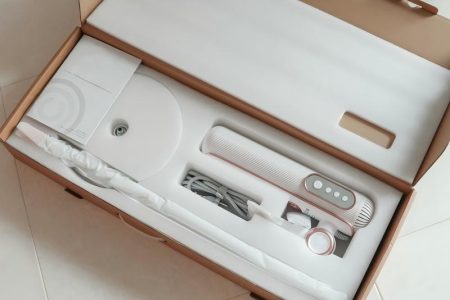
Standing products introduce engineering questions that a handheld product may not face in the same way: base stability, joint durability, movement during adjustment, resistance to vibration, housing temperatures, cable retention, and safe use within the intended environment.
At BAILE, product development is supported by a manufacturing and test process that can include wind-speed and airflow measurement, temperature and noise testing, voltage and current checks, dielectric strength, earth-continuity and leakage-current testing, power-cord flexing, drop testing, and aging tests. The factory has 12 independent aging rooms for continuous running tests and a laboratory equipped for functional, performance, electrical-safety, and reliability checks.
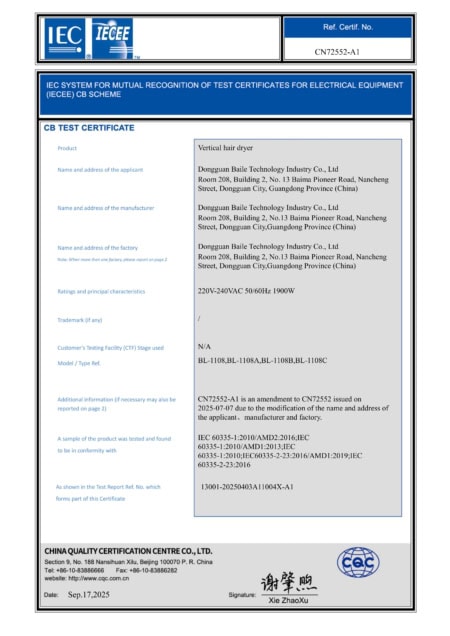
Compliance also needs to enter the conversation before a sample is approved. In the United States, the CPSC’s guidance on hand-supported hair dryers highlights the importance of immersion protection for that product category. It does not automatically define the route for a standing dryer, but it is a useful reminder that electrical safety requirements should be assessed according to the final product design and target market. In the European Union, the [Low Voltage Directive](https://single-market-economy.ec.europa.eu/sectors/electrical-and-electronic-engineering-industries-eei/low-voltage-directive-lvd_en) addresses health and safety risks for electrical equipment within its voltage scope, while [RoHS](https://environment.ec.europa.eu/topics/waste-and-recycling/rohs-directive_en) restricts certain hazardous substances in electrical and electronic equipment.
For BL-1108 or any custom standing hair dryer project, the correct approach is to confirm the target country, voltage, plug, final bill of materials, labeling, instructions, and applicable documentation before production. Compliance support is project-specific; it should never be reduced to a generic certificate claim.
BAILE OEM/ODM Manufacturing Capabilities
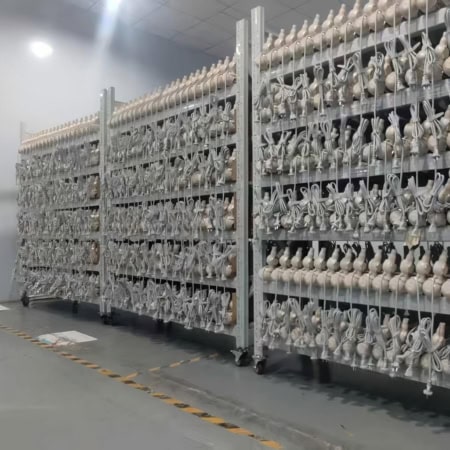
Dongguan Baile Technology Industry Co., Ltd. is a B2B hair dryer manufacturer supporting standing hair dryer OEM/ODM, product development, testing, packaging, and export coordination. Behind BAILE is a manufacturing system with experience in molding, tooling, assembly, testing, and export manufacturing since 2003.
BAILE operates within a manufacturing system with an approximately 10,000 m² total footprint, including an approximately 2,000 m² Dongguan BAILE branch factory. The production platform includes about 800 team members, 100+ injection-molding machines, 10 automatic and semi-automatic assembly lines, and a monthly capacity of approximately 40,000 units. Those resources are not a substitute for a well-defined product brief. They are what allow a brief to move through structural development, material selection, sample confirmation, functional testing, packaging review, and controlled mass production.
For brands developing a standing hair dryer or private-label hair dryer line, BL-1108 can serve as a product platform rather than a fixed, one-size-fits-all answer. BAILE can work with buyers on color and logo direction, functional configuration, voltage and plug adaptation, packaging, manuals, labels, and target-market documentation requirements. New structural or appearance development can also be assessed when a project calls for a more differentiated product route.
Buyer Checklist for a Standing Hair Dryer Project
Before requesting a quotation or sample, buyers can accelerate development by defining:
– The target market and intended use scenario
– Desired height range, air-delivery angle, base footprint, and mobility requirements
– Voltage, plug, power, airflow, temperature, and noise targets
– Required controls, remote-control behaviour, and optional functions
– Packaging, manual, labelling, retail, and e-commerce requirements
– Required compliance pathway and expected order volume
The BAILE BL-1108 shows what a standing hair dryer can become when convenience is treated as an engineering brief, not just a marketing message. For buyers building a hands-free hair dryer program, the objective is clear: translate a real use case into a product that is stable, controllable, testable, manufacturable, and appropriate for its destination market.
Planning a custom standing hair dryer or private-label product line? Send BAILE your target market, expected quantity, voltage and plug requirements, functional configuration, packaging needs, and compliance objectives.
[Discuss your standing hair dryer OEM/ODM project with Dongguan Baile Technology Industry Co., Ltd.](https://baile-cn.com/?utm_source=linkedin&utm_medium=article&utm_campaign=bl1108_standing_hair_dryer)
#StandingHairDryer #HairDryerOEM #HairDryerManufacturer #PrivateLabel #PersonalCareAppliances
## Sources
– [Consumer-product context for BL-1108](https://m.blog.naver.com/daebak_friend/224218624914)
– [U.S. CPSC: Hand-Supported Hair Dryers Business Guidance](https://www.cpsc.gov/Business–Manufacturing/Business-Education/Business-Guidance/Household-Electrical-Products/Hand-Supported-Hair-Dryers)
– [European Commission: Low Voltage Directive](https://single-market-economy.ec.europa.eu/sectors/electrical-and-electronic-engineering-industries-eei/low-voltage-directive-lvd_en)
– [European Commission: RoHS Directive](https://environment.ec.europa.eu/topics/waste-and-recycling/rohs-directive_en)
– [OSHA: Ergonomics Overview](https://www.osha.gov/ergonomics)