
Hair Dryer Surface Finishes and Coatings for OEM/ODM Brands
Build a finish specification that connects brand appearance, housing material, production control and retail positioning.
Baile Technology develops and manufactures custom hair dryer housings with molded colors, spray coatings, matte or gloss finishes, metallic paint, UV coating and soft-touch coating. Our team coordinates the finish with ABS, PC, PC+ABS, PP, PA66 or flame-retardant material options, then controls color, logo position and appearance from sample approval through mass production. Color-customized projects start from 2,000 units, with reference color samples typically completed in 10–20 days for premium, mass-retail, salon and gift-set product positions.
- Matte, gloss, metallic, UV and soft-touch options
- Pantone or physical color sample matching
- Logo process matched to surface geometry
- Signed reference and production-start control
- Appearance inspection, AQL options and third-party inspection support
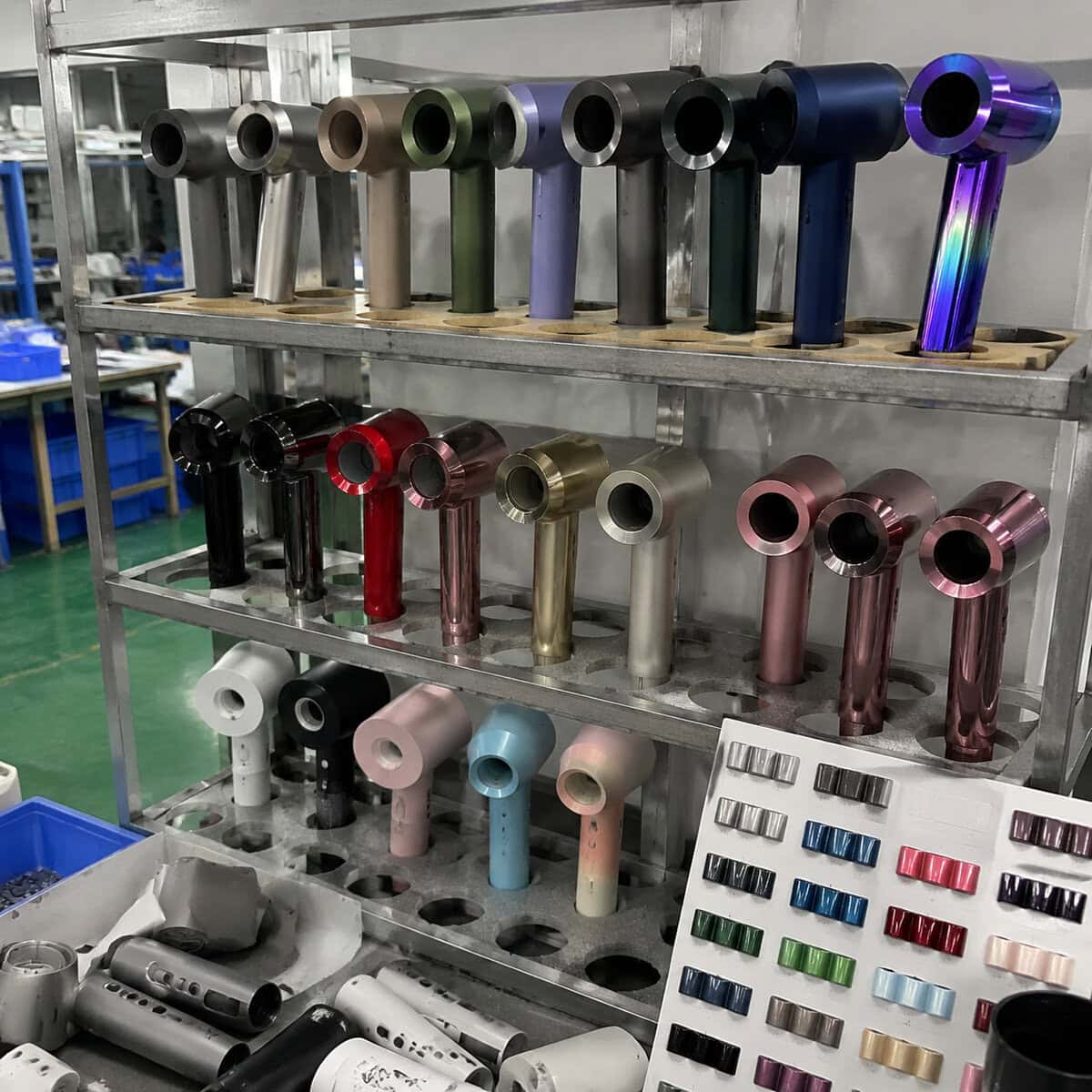
Six Decisions That Define a Production-Ready Finish
Baile converts an appearance concept into six connected decisions before sampling. This framework identifies the product base, treatment zones, measurable color reference, decoration method, acceptance boundary and handling requirement. It gives design, sourcing, engineering and quality teams one shared project definition.
Product Base
- Select an existing Baile model or a new ODM exterior.
- Identify the housing resin, part numbers and target markets.
- Confirm which components remain unchanged and which enter customization.
- This decision separates a faster existing-model project from work requiring DFM, prototypes or new tooling.
Treatment Zones
- Mark every visible area on the housing, handle, buttons and accessories.
- Assign molded color, full coating, local accent or untreated functional surface by part.
- Define boundaries around seams, air inlets, outlets and assembly interfaces.
- The output is a finish map that production can follow.
Color Authority
- Establish the source of truth for color: Pantone reference, customer master or approved physical part.
- Record the viewing and comparison method used for approval.
- Separate housing color from printed packaging color because their substrates differ.
- Name the person or team authorized to approve changes.
Decoration Architecture
- Place the logo, symbols and local metallic details within the complete exterior layout.
- Specify artwork version, size, color, orientation and exact location.
- Keep decoration clear of unsuitable curvature, seams or contact points.
- Connect product marks with packaging artwork without treating both substrates as identical.
Acceptance Boundary
- Define what is critical, major or minor for visible surfaces.
- Agree which marks, edge conditions, color differences or print deviations are unacceptable.
- Select the physical reference and AQL route used for the order.
- Clear boundaries reduce subjective decisions during inspection and shipment release.
Handling Requirement
- Identify where coated parts can be held, fixtured and assembled without visible damage.
- Review contact with nozzles, cables, bags and inserts.
- Specify any separator or protective material needed between surfaces.
- The requirement follows the part from finishing through assembly, warehousing and export packing.
Control the Risks Behind a Custom Finish
A custom surface can fail commercially for reasons that are easy to miss during styling review. Baile identifies the likely failure mode, assigns a preventive action and states the evidence available at the decision point. The matrix helps sourcing teams distinguish a design preference from a manufacturability, branding or handling risk. Detailed material, DFM, production, quality and packaging controls appear in their dedicated sections below.
| Buyer Concern | What Usually Creates the Risk | Baile Control | Decision Evidence |
|---|---|---|---|
| The sample looks different from the design file | Screens, renderings and physical materials show color and reflection differently | Build the reference on the intended part and record the authorized physical standard | Color sample, assembled appearance review and signed reference |
| Two adjacent parts do not look intentional | Resin, base color, texture and viewing angle differ across components | Review the complete color and texture composition on an assembled unit | Part map and assembled approval unit |
| The selected effect is difficult to manufacture | Geometry, seams, fixtures, masking areas or contact points conflict with the concept | Complete finish-focused DFM before tooling or process release | DFM comments and confirmed treatment zones |
| Branding loses clarity on the final surface | Artwork, contrast, curvature or placement does not suit the chosen process | Test the proposed logo method at the real size and location | Marked artwork and decorated sample |
| The delivered units show avoidable surface damage | Parts contact fixtures, accessories or packaging during later operations | Define handling points and protective packing around exposed surfaces | Packing sample, insert layout and outgoing appearance record |
Choose the Right Hair Dryer Finish Family
Baile offers several finish families because visual reflection, tactile feel and production complexity require different process decisions. Each card explains the intended effect, suitable product role, approval focus and commercial implication of one route. The comparison is descriptive rather than a universal durability ranking; final suitability is established on the actual housing material and part geometry.
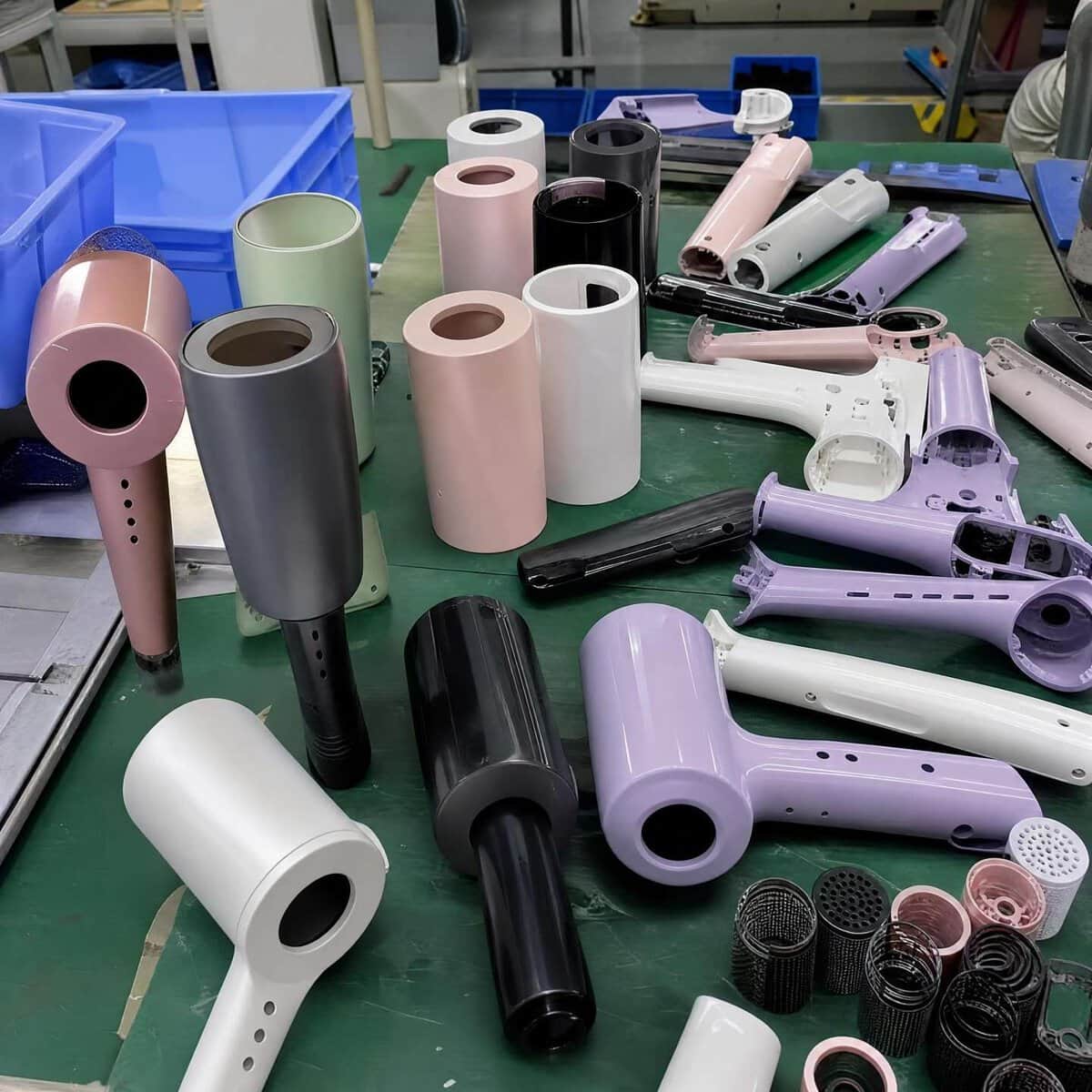
Molded Plastic Color
- Suitable direction: projects requiring color through the molded plastic part rather than a full external coating.
- Brand use: main shells, handles, air-inlet parts or internal-visible components, subject to the product structure.
- Baile confirmation: resin, color reference, molding appearance, mating-part color and visible defects.
- Commercial effect: removes a coating step on selected parts but still requires documented color, molding and batch control.
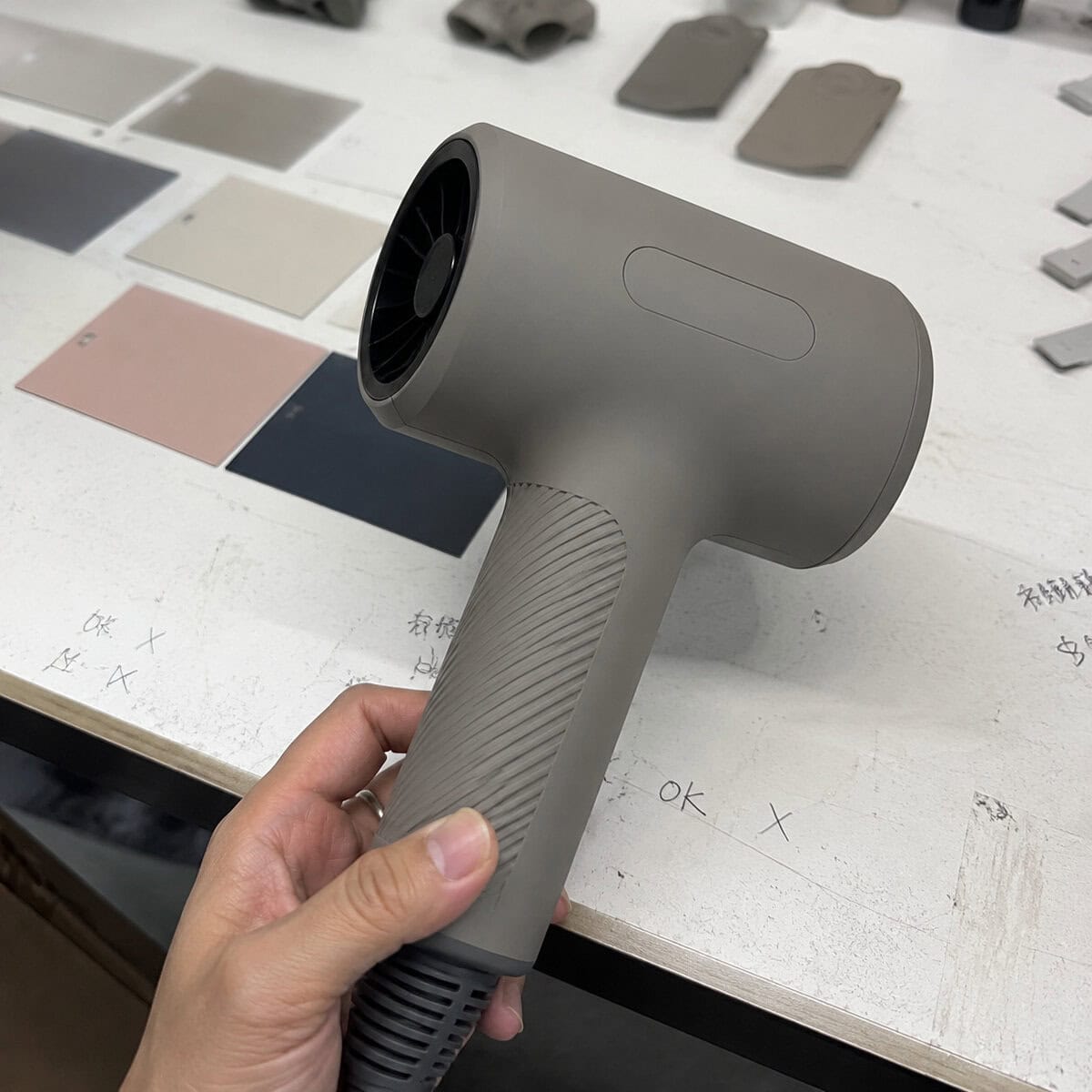
Matte Coating
- Suitable direction: restrained, low-reflection surfaces for premium, salon or contemporary product styling and controlled retail differentiation.
- Brand use: full housings or selected exterior areas, depending on geometry and assembly contact.
- Baile confirmation: matte appearance, color, uniformity, logo contrast, scratches and edge condition.
- Commercial effect: coating coverage, surface preparation, part yield, sample work and packaging protection are included in the complete project quotation.
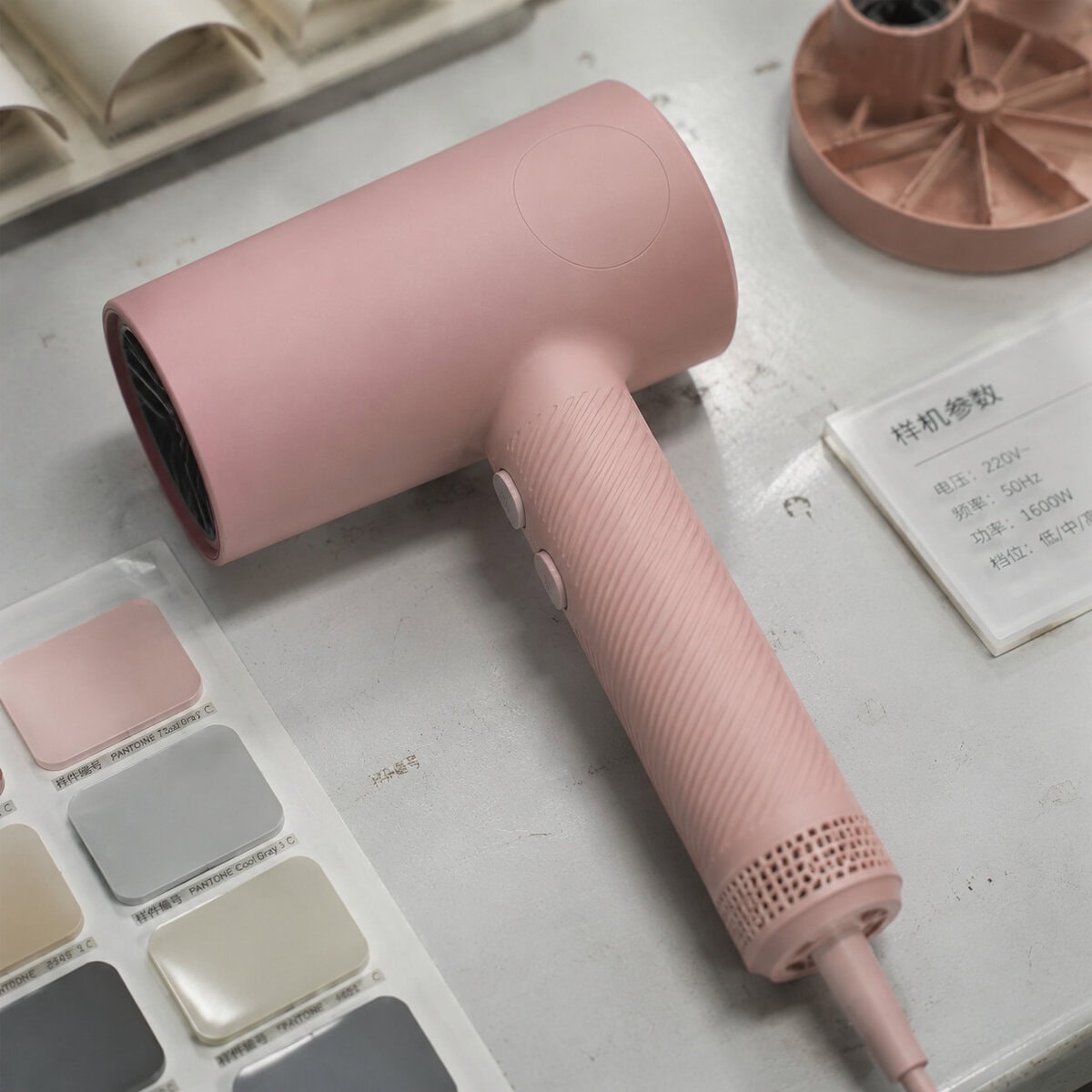
Gloss Coating
- Suitable direction: reflective color, polished retail presentation or contrast against matte components in a defined retail product system.
- Brand use: complete shells, accent parts or decorative areas where gloss supports the visual concept.
- Baile confirmation: surface uniformity, visible marks, color, reflection consistency, print position and assembly appearance.
- Commercial effect: high-visibility surfaces require clear visual acceptance criteria, controlled handling and careful protective-packaging contact control.
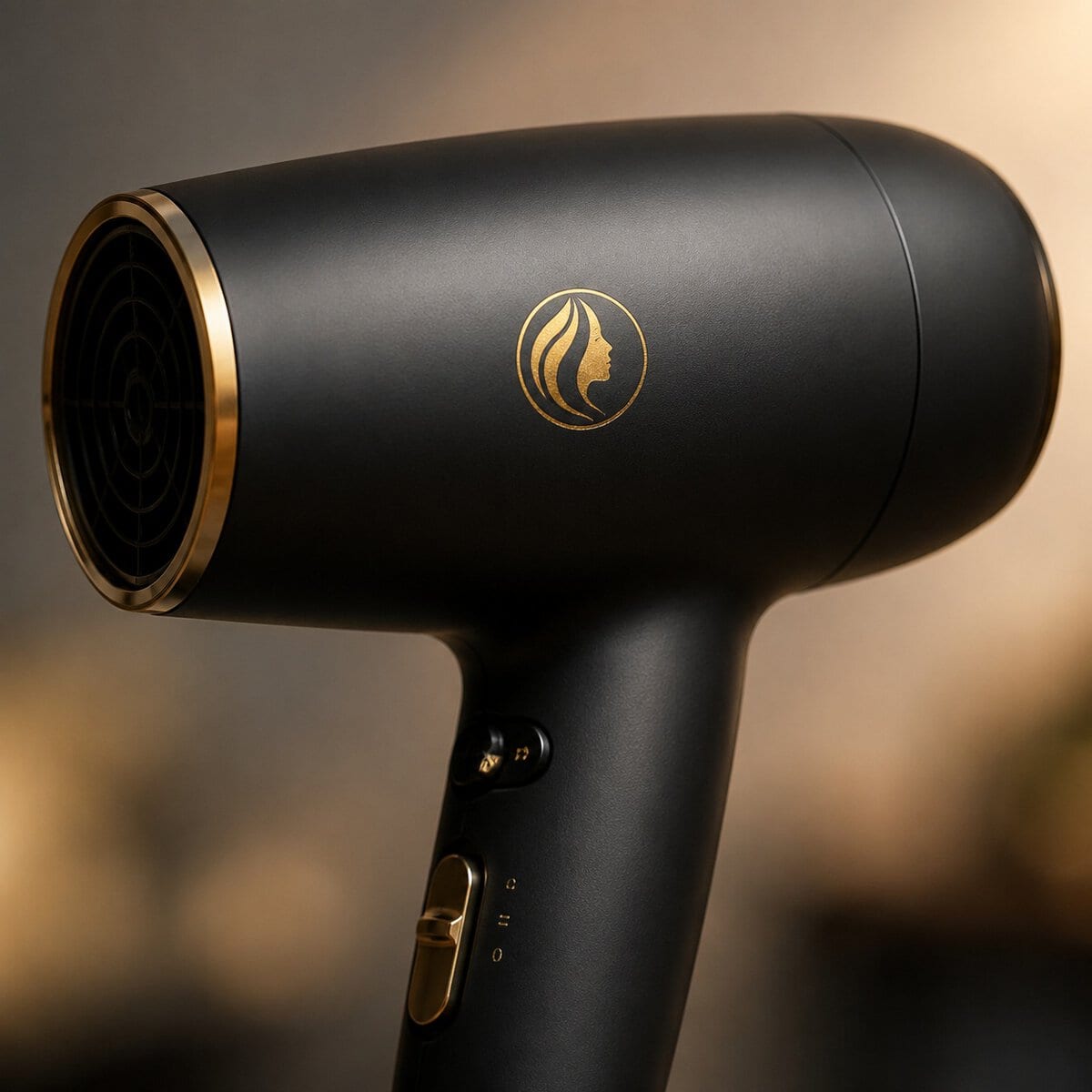
Metallic Paint
- Suitable direction: metallic visual depth for premium high-speed dryers, salon products or gift collections.
- Brand use: major housing sections or selected accents, depending on cost target and appearance complexity.
- Baile confirmation: metallic effect, color direction, part-to-part pairing, local geometry, logo method and sample standard.
- Commercial effect: material, spray process, coverage area and yield influence the final quotation and MOQ planning.

UV Coating
- Suitable direction: projects that specify a UV-applied surface layer as part of the finished housing appearance and inspection standard.
- Brand use: compatible coated or decorated components confirmed through actual samples.
- Baile confirmation: base layer, UV appearance, color, visible surface condition, logo sequence and assembled result.
- Commercial effect: the additional process, inspection and approval steps are defined before sampling and included in the project schedule.

Soft-Touch Coating
- Suitable direction: tactile differentiation on handles or housings for selected premium personal-care projects and defined contact areas.
- Brand use: contact areas or exterior surfaces where the intended feel supports product positioning.
- Baile confirmation: tactile reference, color, visible marks, assembly contact, logo compatibility and protective packaging.
- Commercial effect: physical sample approval is required because touch, appearance and handling cannot be confirmed reliably from renderings or screen images alone.
Housing Materials and Finish Validation
Baile works with ABS, PC, PC+ABS, PP, PA66 and flame-retardant material options. The final resin is selected around structure, temperature exposure, strength, appearance, cost and market requirements. Finish compatibility is confirmed on the actual part and process route before it becomes a mass-production standard. This prevents a material name or sample swatch from being used as a blanket approval for every housing geometry, heat zone, color or coating system.
| Material Option | Typical Baile Project Role | Available Appearance Direction | Validation Before Approval |
|---|---|---|---|
| ABS | Main housings, handles and decorative plastic parts where the product structure specifies ABS | Molded color or a sampled spray/decoration route | Color, molding appearance, shrinkage, flash, scratches, coating result, logo position and assembly fit |
| PC | Selected housings or parts requiring the structural and thermal properties specified by the project | Molded or coated appearance after process confirmation | Part condition, temperature location, surface result, clarity where relevant, logo process and assembled appearance |
| PC+ABS | Housing applications balancing structural, appearance and production requirements | Molded color, spray coating and local decoration after sampling | Color, surface uniformity, molding condition, coating result, assembly gap and batch reference |
| PP | Selected components where PP is specified by the product design | Primarily project-defined molded appearance; any added surface route requires confirmation | Resin grade, color, surface process feasibility, component function and assembly interface |
| PA66 | Functional or heat-related plastic components defined by the internal structure | Usually selected around component function; visible treatment is project-specific | Heat location, dimensions, molding condition, functional fit and any required visible finish |
| Flame-Retardant Materials | Parts or zones where the product design and market requirements call for flame-retardant material | Finish route depends on the exact material grade and part location | Material specification, safety requirement, surface sample, heat exposure, assembly and model-specific compliance documents |
Select a Finish Route by Business Objective
The process name is only one part of the decision. Baile starts with the commercial goal, identifies a workable construction and shows what must be proven before release. The matrix keeps cost, differentiation, tactile intent, part count and repeat-order control visible without assigning unsupported universal performance ratings.
| Business Objective | Recommended Starting Route | Why This Route Fits | What Baile Confirms | Main Cost Drivers |
|---|---|---|---|---|
| Control cost on an established model | Molded base color with limited decoration | Uses the existing part split and avoids adding treatment to every exterior surface | Resin/color combination, visible molded condition and brand-mark execution | Resin grade, color preparation, logo method and order quantity |
| Create a restrained premium exterior | Matte main surfaces with a separate accent component | Builds contrast through part architecture rather than relying on one treatment everywhere | Reflection balance, junctions, accent color and complete assembled composition | Coated area, component count, yield and protective handling |
| Create strong shelf impact | Gloss or metallic emphasis on selected visible zones | Concentrates visual energy where the customer sees the product and keeps other areas simpler | Viewing surfaces, color pairing, boundaries and retail-box continuity | Effect material, area, masking, sample rounds and acceptance level |
| Add a distinctive hand feel | Soft-touch treatment on defined contact areas | Places tactile value where it is experienced instead of coating hidden or high-contact interfaces without purpose | Touch reference, contact zone, visible condition and insert contact | Covered area, handling method, process yield and packing material |
| Build a multi-finish flagship model | Molded, coated and decorative parts combined through DFM | Uses part separation to create a deliberate hierarchy across body, handle, controls and trim | Part map, tooling impact, assembly interfaces and approval sequence | New parts or tooling, process count, fixtures, assembly and inspection scope |
| Prepare a scalable color program | One construction with controlled seasonal colorways | Keeps structure and process architecture stable while color references change by SKU | Color authority, SKU identification, artwork version and batch records | Number of colors, sample rounds, material lots, packaging versions and forecast quantity |
Coordinate Color, Texture and Logo as One System
Baile develops the exterior as an assembled product rather than a collection of isolated swatches. Main housing color, handle color, decorative parts, surface reflection, tactile areas and brand marks are reviewed together so the approved appearance remains clear in production and in retail packaging. The same review defines what must match physically, what is controlled by artwork and what requires a separate printed-packaging reference.
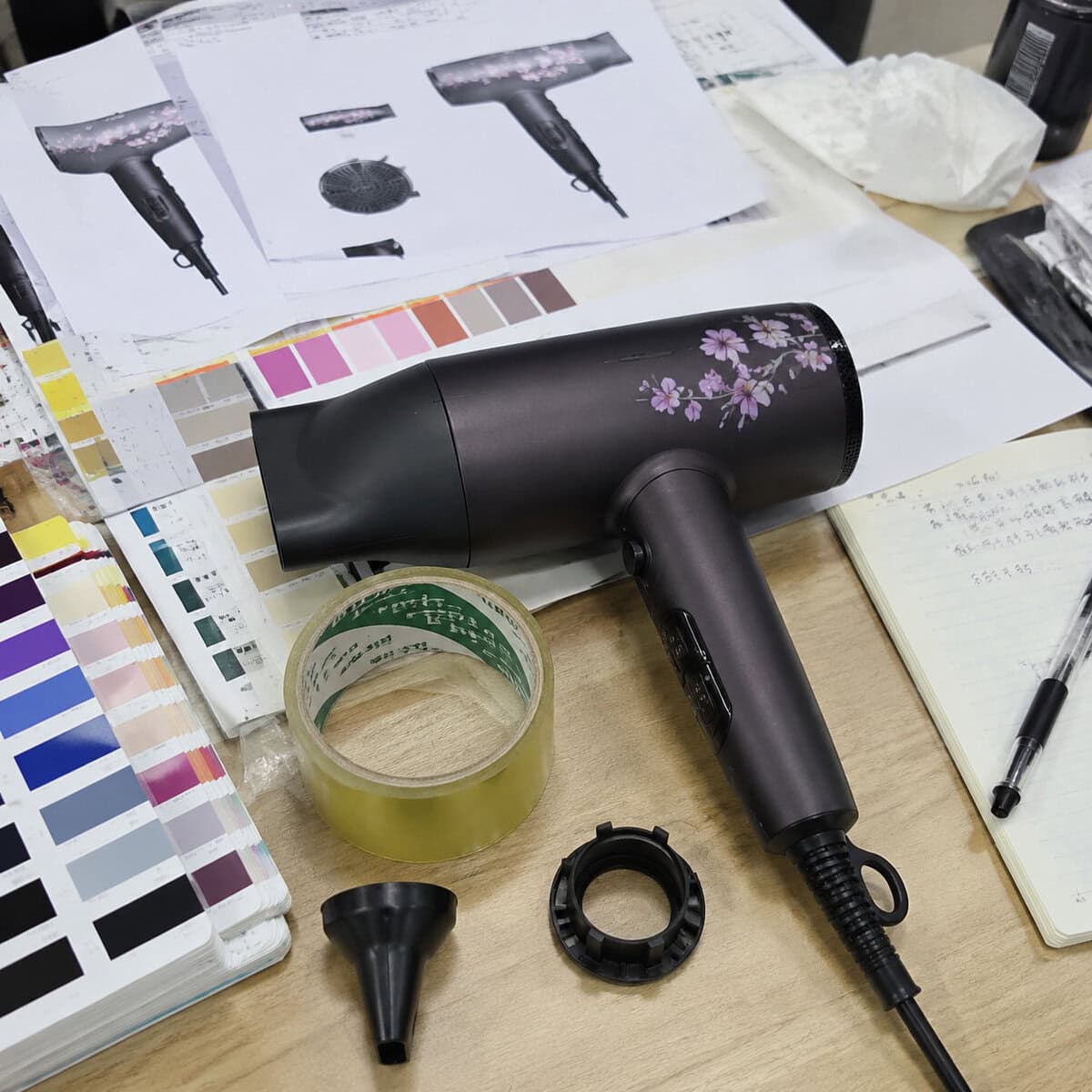
Color Reference
- Start with a Pantone reference or a physical master supplied or approved by the brand.
- Define which parts use molded color and which parts use spray coating.
- Review adjoining parts under the same viewing condition.
- Freeze the approved color on a signed sample; digital images remain communication references, not the sole mass-production standard for production inspection and repeat-order review across future batches.
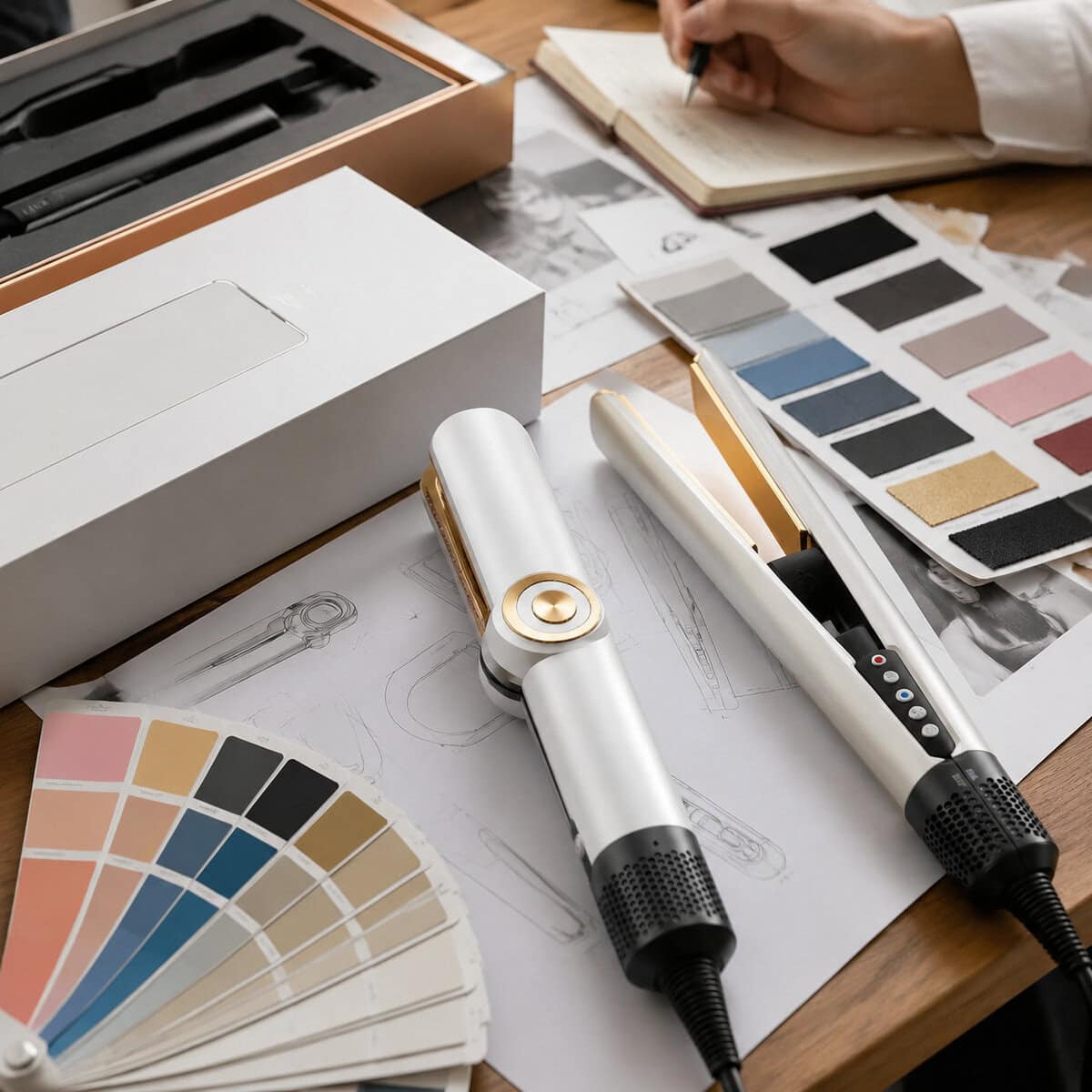
Texture Placement
- Assign matte, gloss, metallic, UV or soft-touch treatment to exact part numbers and visible zones.
- Review handles, buttons, air inlets, outlets, seams and accessory contact areas.
- Keep local accents purposeful so the process route remains controllable.
- Confirm the final combination on an assembled unit before locking the complete production specification, inspection points and protective packing route for the complete order.

Logo Process
- Match silk screen, pad printing, laser marking or heat transfer to the surface and geometry.
- Confirm artwork in a clear vector file, then lock size, color, position and orientation.
- Check contrast against the final housing color and finish.
- Carry the approved logo standard into start-of-run, in-process and outgoing appearance inspection for the confirmed production batch and later scheduled repeat orders.
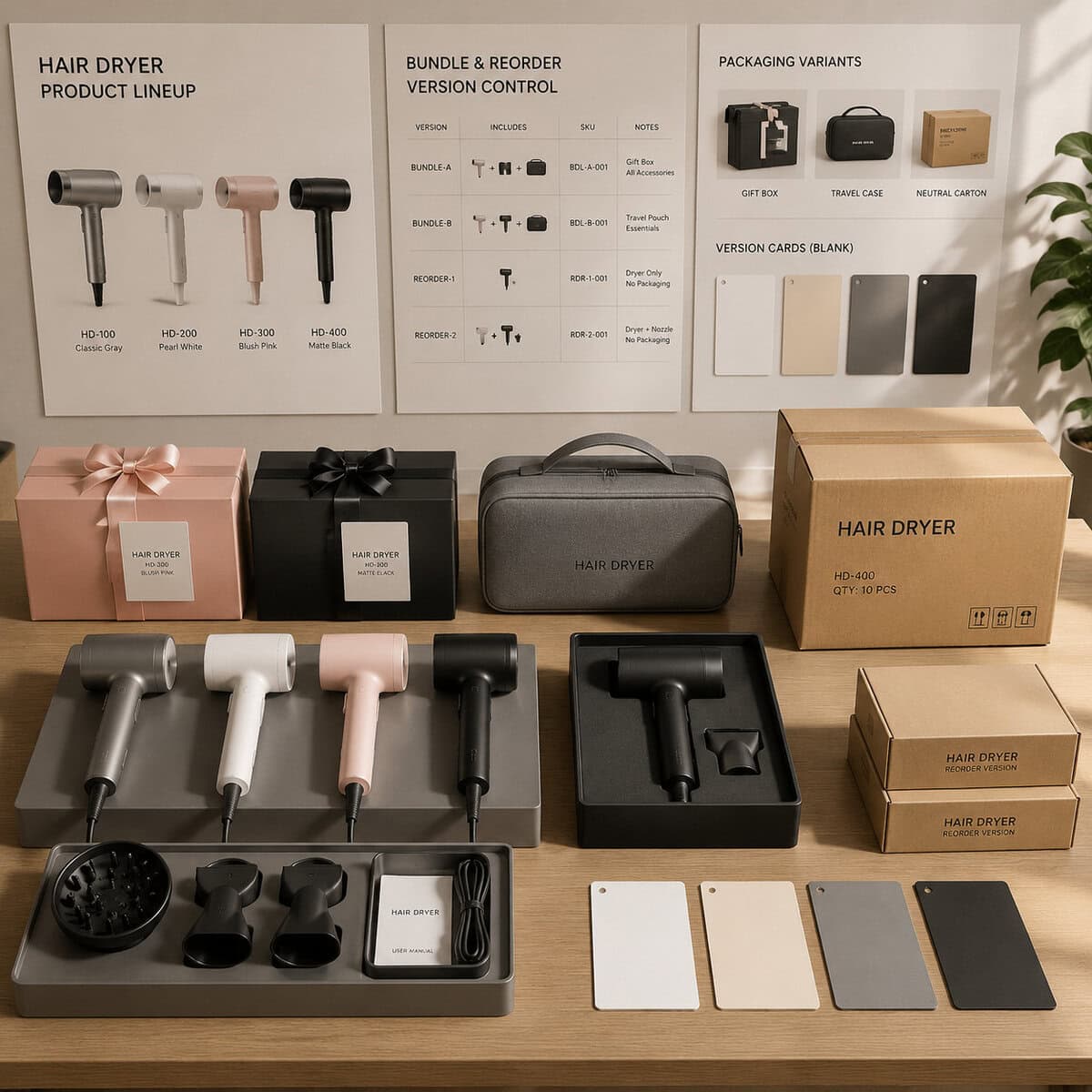
Packaging Continuity
- Extend the approved brand color and logo system to color boxes, gift boxes, manuals, labels and outer-carton information.
- Separate product-surface references from printed-paper references because the substrates, inks and processes differ.
- Confirm packaging artwork, language, barcode and applicable certification marks before production.
- Use protective materials that do not compromise the finished product during packing, storage, warehouse handling and international transport for repeat shipments.
Finish DFM Before Tooling and Mass Production
Surface quality begins with part design. Baile reviews the finish while geometry, material, tooling and assembly can still change. DFM identifies visible boundaries, process access, contact areas and production risks before tooling. It also selects the most controllable route: existing-model customization, a separate decorative component or a new ODM housing.
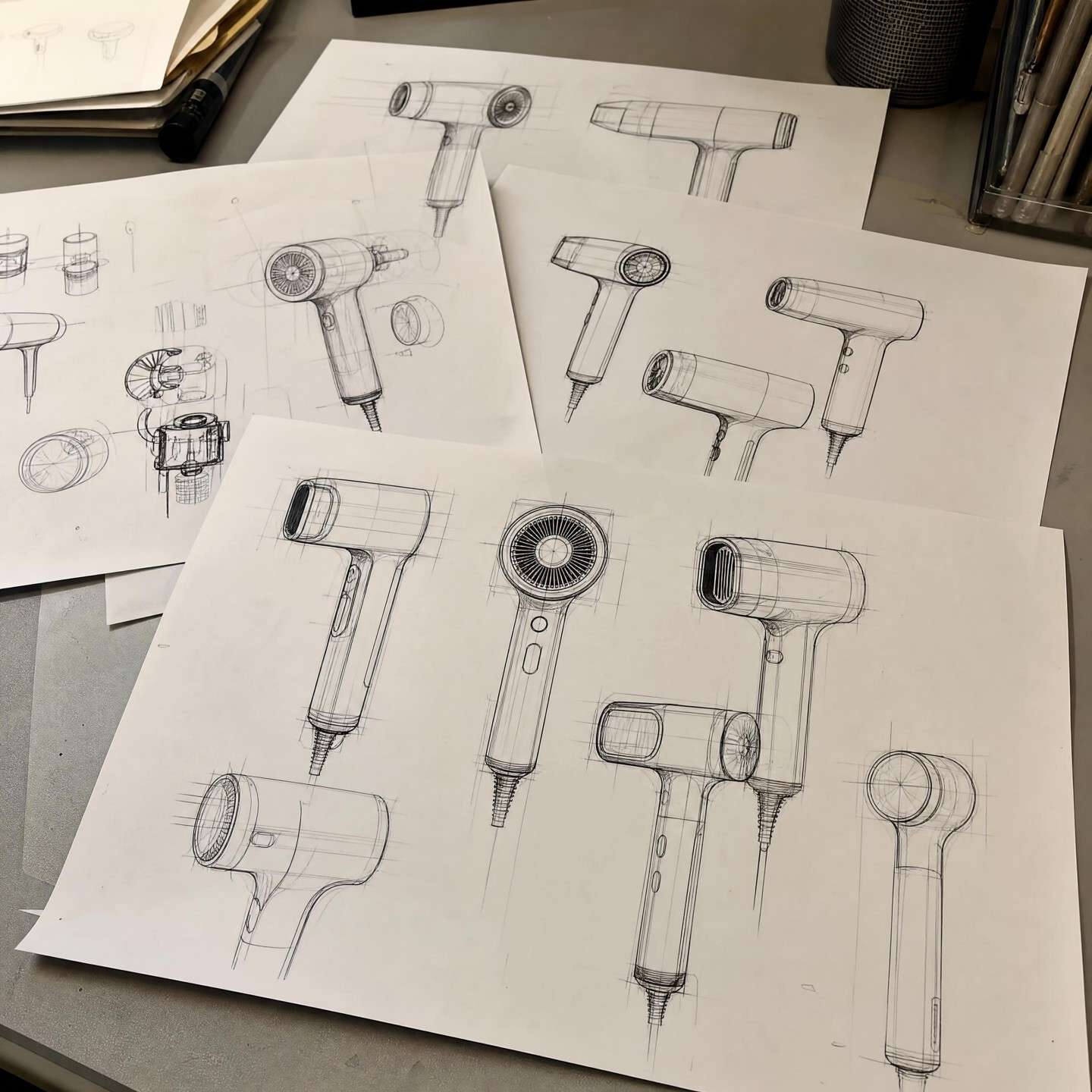
Design the Surface Around Real Housing Geometry
Baile reviews the industrial design and part breakdown to confirm where the finish can be produced, assembled and inspected. The review covers:
- Which surfaces remain visible after assembly and which are hidden
- Parting lines, gates, shrinkage-sensitive areas and structural features
- Seams, buttons, air paths and nozzle interfaces
- Areas requiring molded color, full coating, local coating or separate decorative parts
- Boundaries where two colors or two finish types meet
- Production handling points and logo placement near curves or seams
When a decorative part creates cleaner contrast than complex masking, Baile includes it in the structural proposal. New ODM projects are reviewed before tooling; existing models use their available part splits and boundaries. The output is a practical map of finishable parts and restricted interfaces.

Connect Appearance Decisions to Cost and Production Stability
Each added color, coating layer, masking area or decorative part affects material, handling, inspection, yield and cost. Baile matches the route to the product position and order conditions:
- Existing-model OEM focuses on color, logo and packaging changes.
- Custom-color projects add matching, samples and SKU-specific controls.
- New geometry follows the ODM route with DFM, prototype and mold evaluation.
- Quotations reflect resin, finish area, component count, logo, samples, protection, quantity and schedule.
- Safety-related materials and baseline tests remain part of the product route.
The output is a manufacturable appearance specification for sampling, costing, production approval and batch inspection.
From Color Brief to Approved Production Standard
Baile moves every custom finish through documented confirmation points. The sequence separates early visual direction from the final production standard, gives the brand a physical basis for approval and creates a clear route from sampling to production release. It also exposes changes early, before materials, packaging and capacity are committed to an unresolved appearance.
Define the Finish Brief
Confirm the hair dryer model, target market, housing material, parts to be finished, Pantone or physical color reference, matte/gloss/metallic/UV/soft-touch direction, logo artwork, quantity, packaging, launch plan and required approval date.
Review the Process Route
Baile reviews resin, part geometry, visible zones, coating sequence, logo method, assembly contact, heat-related areas, packaging protection, MOQ, schedule and commercial implications. Existing-model and new-tooling projects follow different development routes.
Produce the Finish Sample
The selected color and surface process are applied to the intended material or housing part. Color-customized samples normally require 10–20 days, depending on color matching, process complexity, material availability, artwork readiness and confirmation rounds.
Approve the Assembled Appearance
Review color, finish, touch where applicable, part pairing, logo size and position, assembly gaps, buttons, nozzles and visible defects on the complete unit. Record changes before signing the final sample.
Freeze the Master Standard
Baile locks the signed sample, limit sample or production standard sample together with the confirmed specification, artwork and packaging files. These controlled references guide material preparation, first-article confirmation, process inspection and shipment release.
Release Mass Production
The first article is checked before full production. In-process inspection monitors appearance and logo execution, while final and outgoing inspection verify the order color, finish, packaging version and batch requirements.
How Baile Produces Finished Hair Dryer Housings
Baile integrates housing production, surface processing, logo application, assembly checks and final inspection within a controlled manufacturing flow. Automated injection molding and dedicated surface-decoration capabilities are supported by start-of-run and in-process quality controls. This sequence keeps the approved finish connected to the correct material, part, artwork, order batch and packaging version.
Material and File Release
Production receives the confirmed resin, color, part list, finish specification, logo artwork and signed sample. Incoming checks verify material or molded-part appearance, dimensions, color, batch, labels, quantities and order specifications.
Housing Injection Molding
Housing, handle, nozzle, filter-frame and decorative plastic parts are molded according to the project specification. Checks cover color, shrinkage, flash, deformation, scratches, visible lines, clips, screw posts and assembly fit.
Surface Process Setup
The approved coating or decoration route is set for the specified components. Part condition, process sequence, coverage boundaries, logo location, fixtures and handling points are confirmed through the first article before full release.
Coating and Decoration
Baile applies the confirmed spray, UV, matte, gloss, metallic or soft-touch route, followed by silk screen, pad printing, laser marking or heat transfer where specified in the approved production process.
In-Process Appearance Control
Scheduled IPQC checks follow the applicable time, batch, process or order plan throughout production. Inspectors review appearance consistency, coating condition, color, decoration placement, part fit, handling damage and identified defects.
Assembly and Protected Packing
Finished parts are assembled and checked with buttons, seams, nozzles and accessories. Product appearance is verified before packing, then protective bags, inserts, retail packaging and outer cartons are applied as specified.
Surface Quality Checks and Available Evidence
Baile controls exterior appearance at multiple stages instead of relying only on a final visual check. The exact sampling level and acceptance criteria are confirmed by product model and order, while records, approved samples and inspection reports support project review and shipment release. This evidence can also support customer quality teams and appointed inspectors when appearance criteria are agreed before production.
| Control Stage | Surface-Specific Check | Timing or Method | Available Project Evidence |
|---|---|---|---|
| Incoming Quality Control | Resin or molded-part color, appearance, dimensions, batch and visible molding defects | Key materials 100% inspected; ordinary materials sampled; packaging materials checked by batch | Incoming inspection records, material batch information and abnormal-item records |
| First-Article Confirmation | Color, finish, logo position, coating appearance, assembly gap and complete product appearance | Before a new order starts, a new color enters production or a process changes | First-article record, signed sample, limit sample or production standard sample |
| In-Process Quality Control | Appearance consistency, scratches, uneven coating, print position, part fit and assembly handling | Every 3 hours, every 2 batches, every process, or according to the order requirement | IPQC records, isolated-defect records, correction and reinspection records |
| Finished Product Inspection | Exterior appearance, color, logo, function, nozzle fit, accessories and packaging | Full inspection, sampling inspection or customer-defined method | Finished-product inspection, rework and release records |
| Outgoing Quality Control | Order model, color, logo, packaging version, carton marks, quantity and shipment documents | Before packing, warehousing or shipment; AQL as agreed | OQC report, packing list, carton labels and shipment inspection records |
| AQL / Customer Standard | Appearance defect categories and acceptance level agreed for the order | AQL 1.0, 1.5, 2.5 or 4.0 according to customer and order requirements | Sampling report and lot-release decision |
| Third-Party Inspection | Appearance, function, packaging, labels, quantity, dimensions, weight and supporting documents | SGS, BV, Intertek or a customer-appointed inspector | Third-party inspection report and corrective/reinspection records when required |
Maintain Finish Consistency Across Repeat Orders
For a brand program, the finish standard must survive more than one sample and one shipment. Baile uses controlled references, production-release checks, batch records and nonconforming-product procedures to keep the specification visible throughout repeat-order planning. Artwork and packaging versions are included so a later reorder does not rely on memory, email images or an obsolete file.

Use One Approved Standard Across Every Control Point
Baile links the visual standard to the order specification rather than leaving color and finish as informal comments. The controlled reference can include:
- Signed color and finish sample
- Limit sample for agreed visible conditions
- Confirmed part list and material route
- Logo artwork, size, color, location and orientation
- First-article confirmation record
- Packaging version and protective method
- Order and production batch identification
These references stay with the project file for production, inspection and repeat-order release.
Before a new color enters production, after mold maintenance or when the process changes, Baile repeats first-article confirmation. Production, quality, engineering and project teams participate according to the project requirement, and customer confirmation can be included where necessary. During repeat orders, the team checks the current specification and approved references before releasing material and production. This makes changes visible and prevents an old artwork file, color direction or packaging version from becoming the uncontrolled reference. The same reference set supports inspection discussions, documented decisions and shipment release.
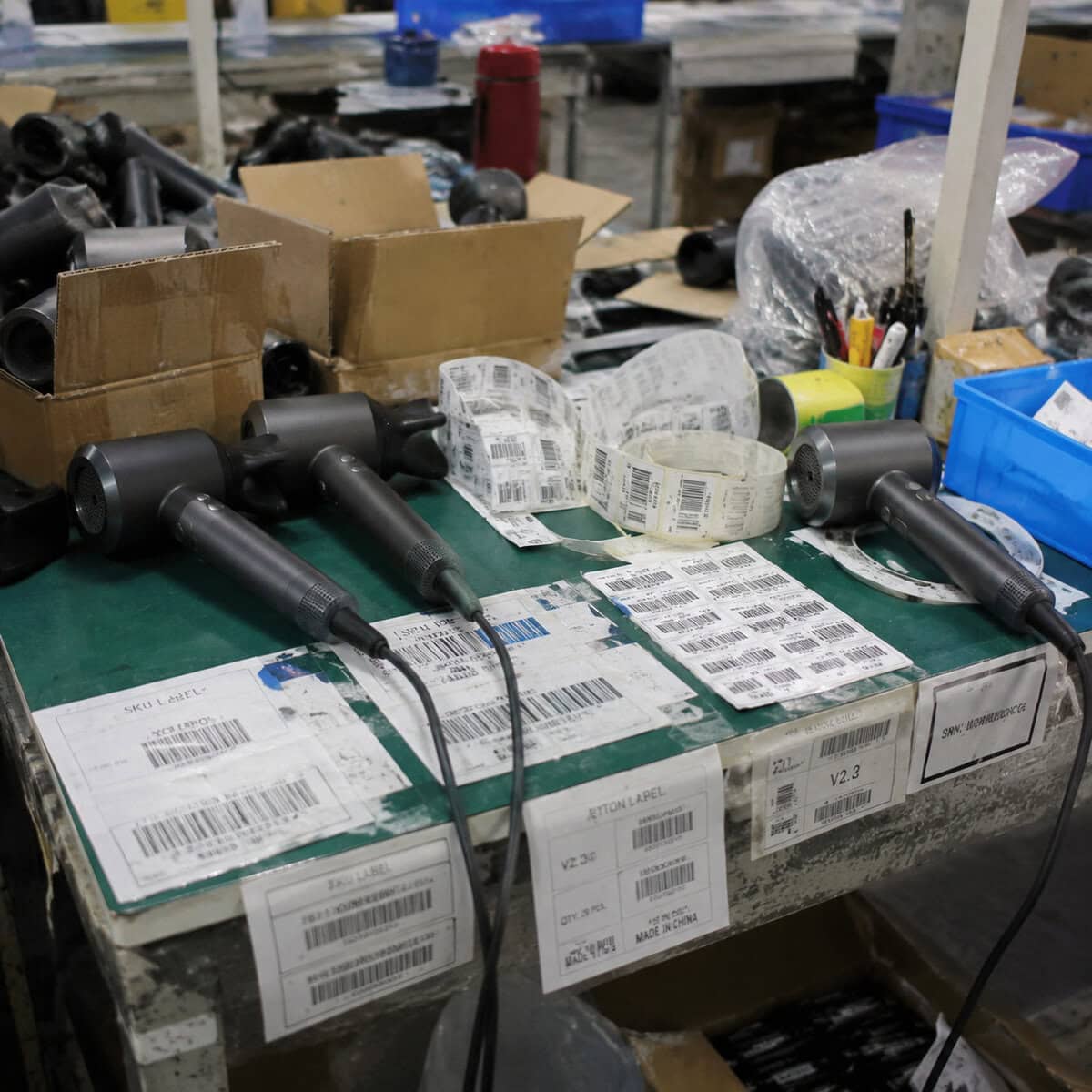
Contain Appearance Exceptions Before Shipment
When an appearance exception is found, Baile applies a defined nonconforming-product process instead of mixing uncertain parts into the accepted batch. The response includes:
- Identify and isolate the affected material, component or finished product.
- Record the issue and confirm the potentially affected production range.
- Review whether the source relates to material, molding, coating, printing, assembly or packaging.
- Correct the process, rework or reject affected units as appropriate.
- Reinspect the corrected output before release.
- Update process controls, training, supplier actions or limit samples when required.
Batch traceability can connect the order number, production date, material batch, production line, QC records, packaging record and shipment record. If a market complaint occurs, Baile uses the available images, video, batch information and production records to support cause analysis and corrective action for the current and subsequent orders. Identified improvements can be carried into supplier controls, work instructions, inspection standards, training or updated limit samples.
Material and Market Compliance for Finished Housings
Surface appearance is part of an electrical product and must remain connected to the product model, material specification and destination market. Baile prepares certification and testing support by project, including applicable CE, RoHS, REACH, UKCA, ETL, UL, FCC, PSE, KC, SAA, GS, EMC, LVD, ErP or CB routes. Document applicability is confirmed before claims or marks are placed on the product, packaging or page.

Match Documents to the Model and Destination Market
Baile confirms the target country, voltage, plug, product model, material route and required channel documentation before the compliance plan is finalized. This matters because a certificate or report for one configuration cannot automatically be treated as evidence for every housing material, color, coating, power rating or market version.
For EU projects, Baile can support applicable CE, LVD, EMC, RoHS, REACH and ErP requirements. UK projects can include UKCA and RoHS support. North American routes may involve ETL, UL and FCC requirements, while Japan, Korea and Australia/New Zealand projects may require PSE, KC or SAA/RCM support. CB-related testing can support multi-market planning where applicable.
The final page, quotation and project file should identify which documents already apply to the selected model and which testing or certification work remains project-specific. This keeps compliance language accurate and gives the buyer a clear action list before production. It also prevents one material, voltage or market version from being presented as evidence for an unverified configuration.

Keep the Finish Inside the Complete Safety Review
Baile reviews housing material and finish decisions alongside the hair dryer’s electrical and thermal structure. The complete project can include checks for:
- Material specification and flame-retardant requirements where applicable
- High-temperature zones around the outlet, heating system and internal airflow path
- Housing, handle and outlet-area temperature rise
- Insulation, dielectric strength, leakage current and grounding where applicable
- Overheat protection using the specified thermostat, thermal fuse or NTC route
- Surface sample and assembled-product appearance after the structural route is confirmed
- Product labeling, rated information, safety warnings and certification marks
Baile’s laboratory capability includes temperature, voltage/current, dielectric-strength, grounding-resistance and leakage-current test equipment. Exact tests, limits and reports are defined for the model and target market. Surface customization is released only as part of that controlled product specification, not as an isolated cosmetic change. The agreed evidence scope is recorded before production approval, and any public claim remains tied to the applicable model, material, voltage and destination market.
Protect Finished Surfaces in Retail and Transit Packaging
Baile plans packaging after the finish and accessory layout are confirmed. The protection route considers surface contact, movement, abrasion, nozzle placement, cable storage and the expected retail or export journey. Packaging color and graphics remain a separate approval standard from the product coating. This distinction lets quality teams inspect the housing finish, printed packaging and transit protection against the correct references at each stage.

Surface Contact Protection
- Anti-scratch bags, PE bags, bubble bags or paper protection can be selected according to the approved finish and packing route.
- Direct contact between coated surfaces, cables, nozzles and loose accessories is reviewed before release.
- Product appearance is checked before packing so packaging does not conceal an upstream surface defect.
- The final material is confirmed with the actual product, accessories and complete insert layout before bulk packing.
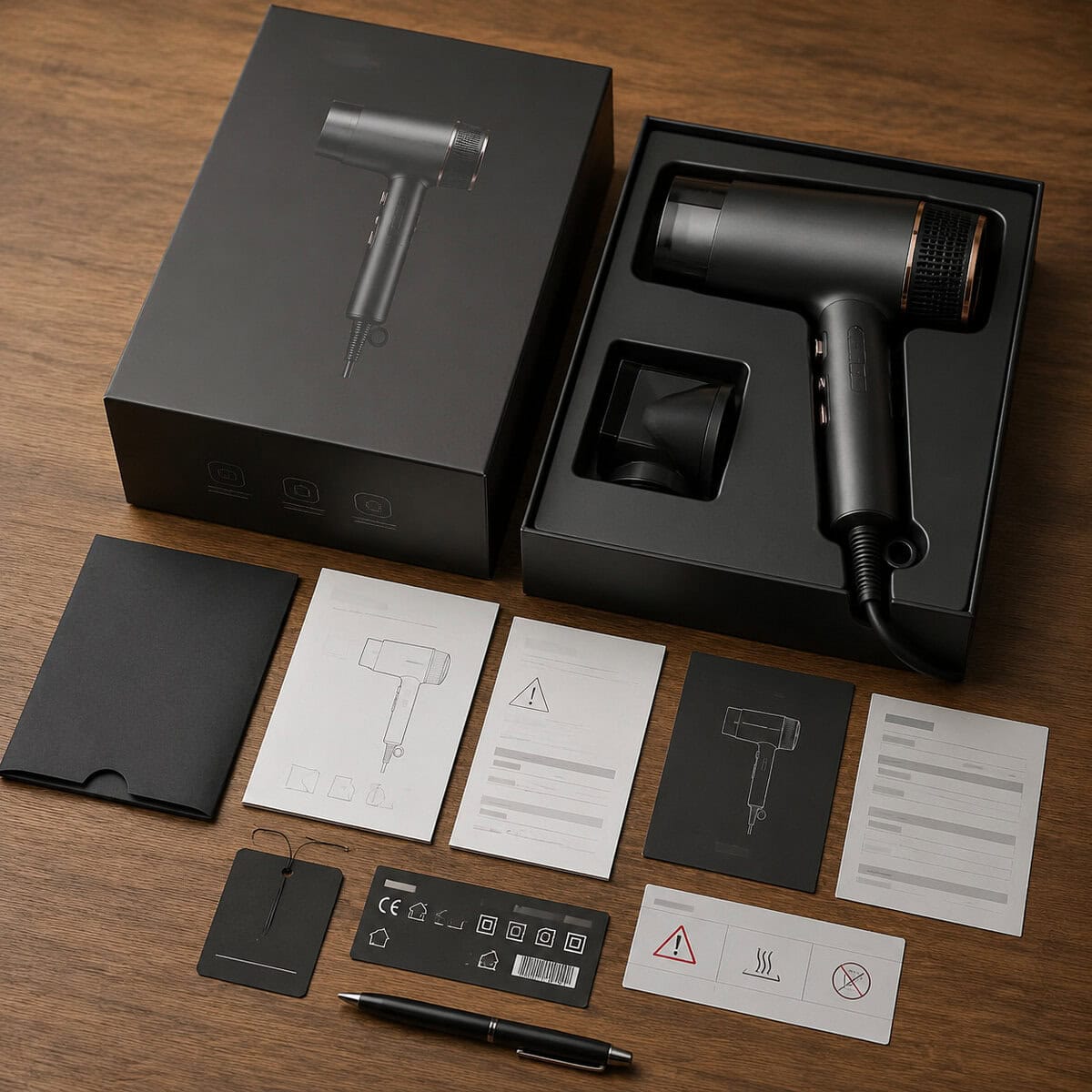
Stable Product Inserts
- Blister, molded pulp, EVA, foam or corrugated inserts can hold the dryer and accessories in defined positions.
- The insert structure considers housing geometry, nozzle count, cable location, surface contact and the intended retail unboxing sequence.
- Baile checks that parts do not move, collide or load exposed finished areas during handling.
- Paper-based, recyclable and reduced-plastic options are available for suitable packaging briefs and channel requirements.

Retail Presentation
- Color boxes, window boxes, display boxes and gift boxes can carry the brand’s approved color and visual system.
- Product name, specifications, voltage, plug, safety warnings, barcode, certification marks and language version are confirmed before printing.
- Baile checks packaging color, print content, logo position, barcode readability, language version and insert fit separately from the housing finish approval for each order and shipment.
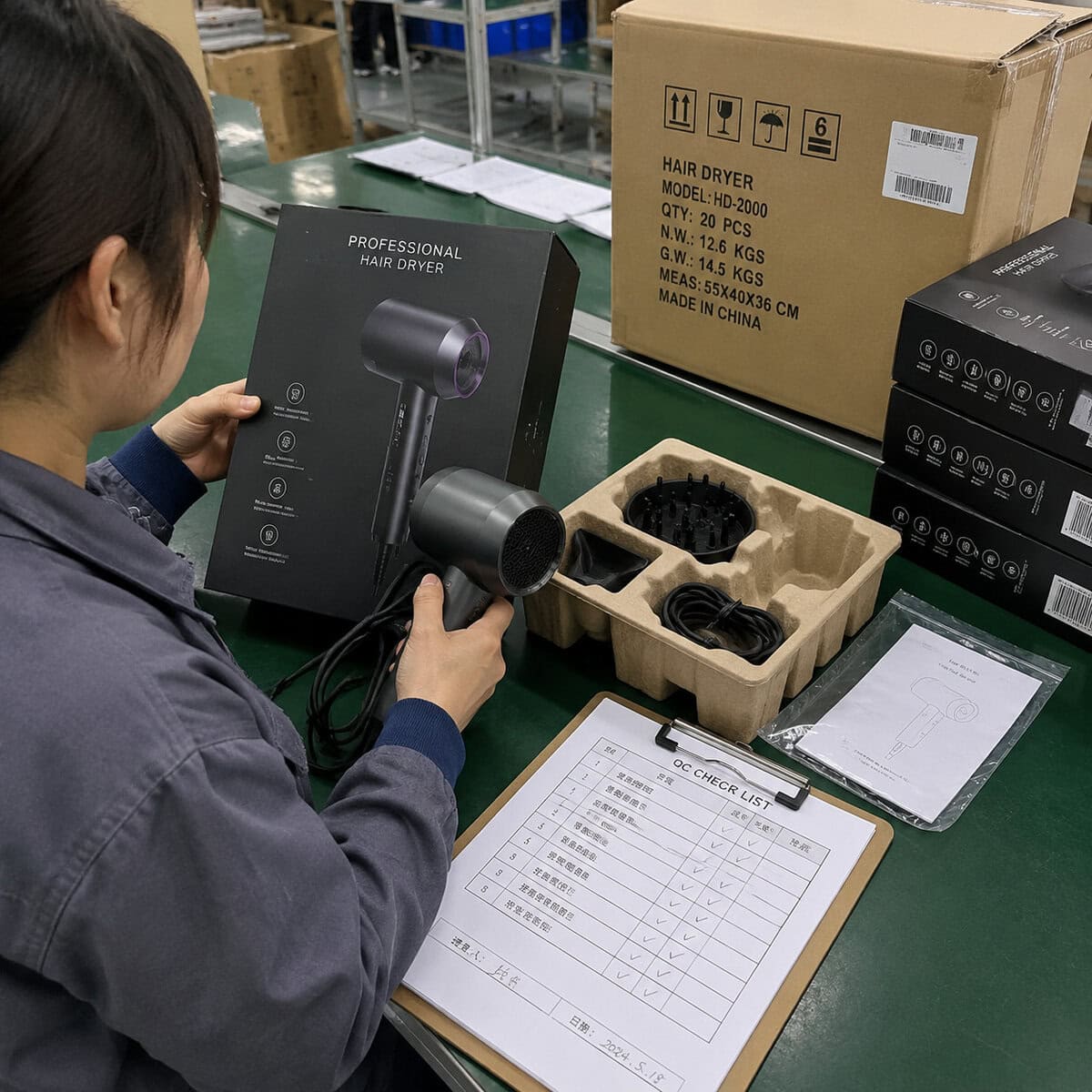
Export Carton Protection
- Three-layer, five-layer or reinforced export cartons are available according to the shipment plan.
- Outer-carton checks cover material thickness, sealing, carton marks, packing quantity, gross weight and net weight.
- Baile can support drop, vibration and stacking evaluation for the agreed packaging system.
- Shipment inspection verifies the order batch, product color, packaging version, carton information and supporting shipment documents before final release.
MOQ, Samples, Timing and Payment Milestones
Finish complexity changes the sample route, material preparation and production controls. Baile separates standard OEM, color customization and new ODM development so brands can choose a commercially workable starting point. Timelines begin after the required specification, artwork, payment, sample and packaging confirmations are complete. Exact coating, packaging, tooling, certification and courier charges are quoted against the confirmed scope rather than presented as one universal fee.
| Project Item | Baile Reference | Applies When | Important Conditions |
|---|---|---|---|
| Standard OEM MOQ | 1,000 units | Existing model with logo, manual and standard packaging adaptation | Final MOQ depends on model, packaging, logo, labels and destination market |
| Custom Color MOQ | 2,000 units | Molded color, spray color or surface-finish adjustment | Includes color matching, sample approval, material preparation and batch color control |
| ODM MOQ | 3,000 units | New exterior, structure, function or tooling development | Tooling, engineering validation and project complexity affect the final plan |
| Logo Sample | 7–15 days | Printed or laser-marked branding on a confirmed model | Begins after artwork, method, position, size, color and payment are confirmed |
| Color / Finish Sample | 10–20 days | Color matching and surface-process confirmation | Timing depends on material, process complexity, sample rounds and approval speed |
| New Appearance Prototype | 30–60 days | New industrial design or structural prototype before tooling | Depends on ID, structure, prototype method and engineering verification |
| New Mold First Sample | 45–75 days | New housing, handle, nozzle or decorative-part tooling | Depends on mold count, structure complexity, trial and modification requirements |
| Mass Production | About 35 days | Regular bulk order after approvals | Starts after sample, packaging, order and materials are confirmed; peak season and special processes can affect schedule |
| Sample Payment | 100% before arrangement | Existing or customized sample work | Sample, customization and courier charges are quoted according to project scope |
| Tooling Payment | Before mold development | New tooling project | Tooling scope and fee are confirmed before mold work starts |
| Bulk Order Payment | 30% deposit / 70% before shipment | Regular mass-production orders | Long-term terms may be discussed based on cooperation history; third-party inspection can precede balance and shipment |
Finish Routes for Different Brand Positions
Baile configures the exterior around the product’s price band, channel and visual role. These four scenarios show how the same process vocabulary produces different design systems. They focus on composition and channel fit; material validation, commercial terms and inspection evidence remain in their dedicated sections.

Premium High-Speed Line
- Visual architecture: use one restrained main body treatment and reserve stronger metallic or gloss effects for trim, controls or nozzle details.
- Brand priority: create a recognizable silhouette and controlled close-up appearance for premium product imagery.
- Product constraint: keep handle contact, housing seams, magnetic nozzle interfaces and outlet-area material decisions visible in the design review.
- Portfolio role: establish a flagship color language that can extend to coordinated accessories and packaging.

Mass-Retail Product Line
- Visual architecture: rely on molded color or one clearly bounded exterior treatment rather than several small effects.
- Brand priority: maintain a readable logo and recognizable SKU color while controlling process count.
- Channel constraint: coordinate the product with shelf-facing graphics, barcodes and replenishment labels without confusing paper color with housing color.
- Portfolio role: support repeatable core colors and clearly identified seasonal variants on an established product structure.
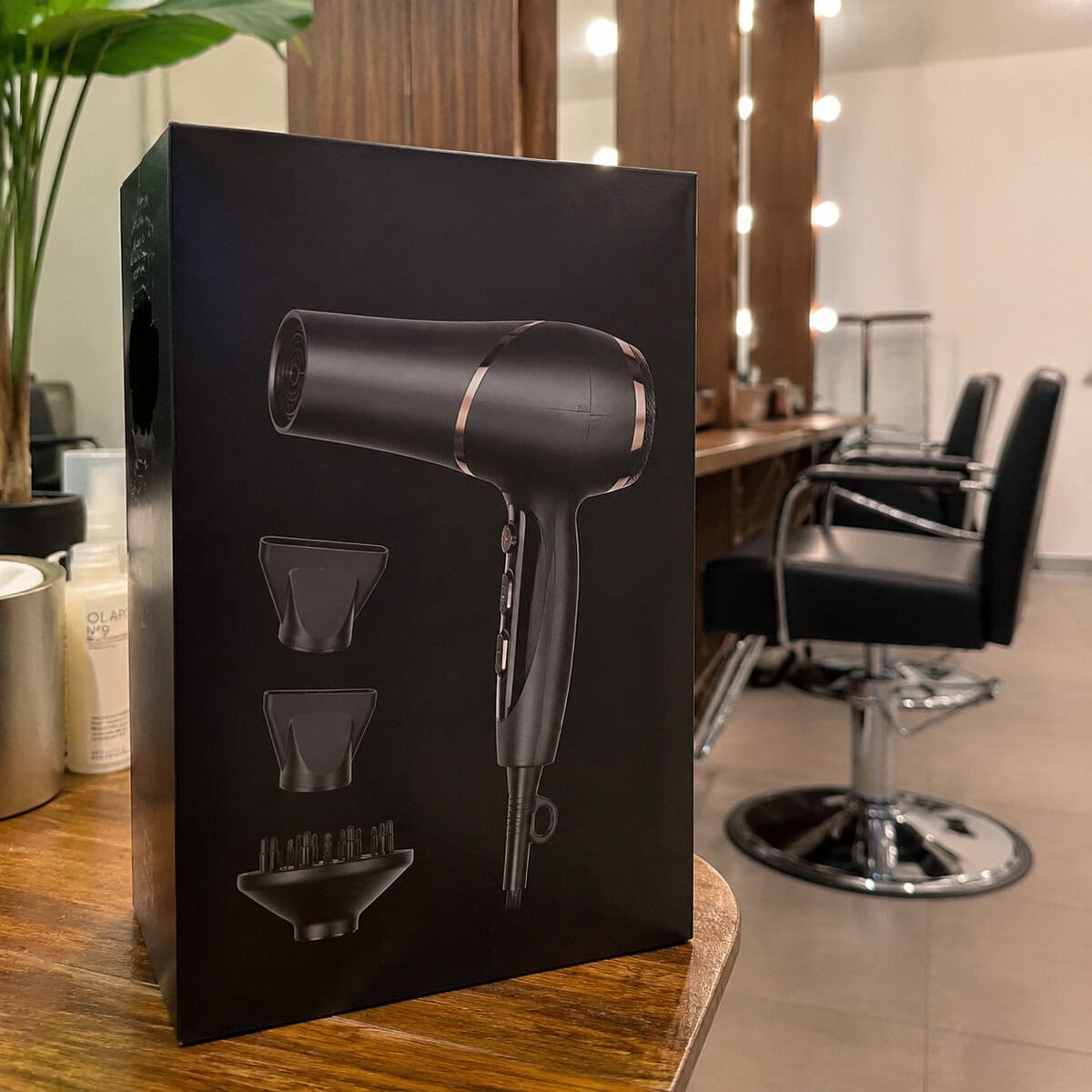
Professional Salon Line
- Visual architecture: place the main finish around the housing while treating the handle, controls and nozzle interfaces as functional zones.
- Brand priority: keep the professional mark visible during use and maintain a coherent appearance across concentrator and diffuser options.
- Product constraint: review high-temperature locations, assembly contact and line-cord handling alongside the exterior specification.
- Portfolio role: create a practical salon identity that works in wholesale packaging and professional product displays.
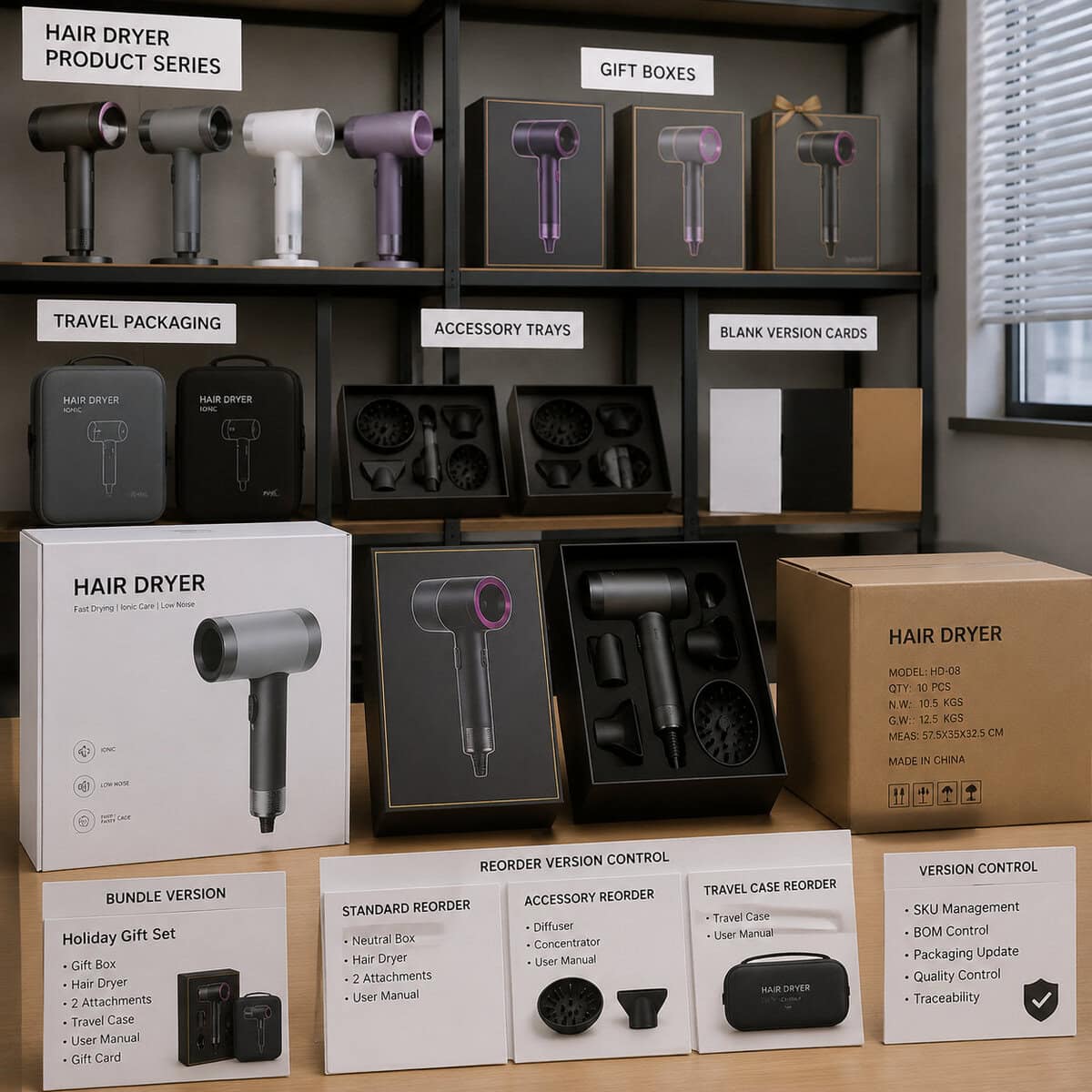
Gift and Retail Set
- Visual architecture: coordinate the dryer body, nozzles, decorative details and presentation box as one assortment.
- Brand priority: make the opening sequence reveal the primary color and logo without loose accessories covering visible surfaces.
- Channel constraint: balance gift presentation with the required manual, labels, voltage information and protective insert.
- Portfolio role: use accessory color and printed graphics to extend the theme without adding unnecessary treatment to every product component.
What Baile Locks Before Production Release
Production starts from controlled outputs, not scattered comments across emails and images. Baile consolidates the exterior into six working records. Together, they show what will be made, how appearance will be judged, which revision is current and which release evidence belongs to each production batch.
Part Finish Map
- Identifies every exterior component by model and part location.
- Assigns molded color, coating, local decoration or untreated functional status.
- Marks transitions around seams, buttons, air paths and accessory interfaces.
- Gives engineering, production and quality teams the same visual scope for setup and inspection.
Master Color Reference
- Names the Pantone reference, customer master or approved physical part used for comparison.
- Separates the product reference from paper packaging and digital display colors.
- Records the authorized approval owner and any agreed viewing condition.
- Preserves a traceable source when an SKU returns for replenishment.
Decoration Release
- Stores the released vector artwork and revision number.
- Defines logo process, dimensions, color, orientation and position by component.
- Includes control symbols or local decorative details where applicable.
- Prevents an obsolete file or packaging graphic from replacing the approved product artwork during a later order.
Acceptance Standard
- Defines the physical sample, limit sample or other agreed reference used by inspectors.
- Classifies relevant appearance defects and the order's AQL route.
- States the inspected surfaces, viewing method and lot-release authority.
- Keeps subjective preferences separate from documented acceptance criteria when a decision is required.
Packaging Interface
- Records the bag, separator, insert and accessory positions touching the finished product.
- Shows cable and nozzle placement around exposed housing areas.
- Links the approved product arrangement to the retail box and export carton.
- Gives packing teams a defined method for controlling movement and surface contact.
Change Record
- Lists the current material, finish, artwork, packaging and document revisions.
- Records approved changes and the order from which each change applies.
- Connects production-release results with the applicable batch.
- Provides the baseline for troubleshooting, replenishment and planned color extensions without reopening settled decisions.
Hair Dryer Surface Finishes FAQ
These answers cover the commercial and technical decisions that most often determine a custom hair dryer finish project. Each route remains tied to the selected model, housing material, target market and approved physical sample. Exact quotation, compliance and inspection details are confirmed in the project specification before sampling or production.
Which hair dryer finishes does Baile offer?
Baile offers molded colors, spray coatings, matte and gloss finishes, metallic paint, UV coating and soft-touch coating. Local metallic-effect decoration is also available for compatible components. The selected route is confirmed on the intended material and housing part, then locked through an approved physical sample before mass production.
Can Baile match our Pantone color?
Yes. Baile can work from a Pantone reference or an approved physical color standard. A color-customized sample normally takes 10–20 days. The signed color reference, not a screen image alone, becomes the basis for production and shipment inspection.
What is the MOQ for a custom finish?
The standard MOQ for a color-customized project is 2,000 units. Standard OEM projects based on existing models start from 1,000 units, while ODM projects start from 3,000 units. The confirmed MOQ also depends on the model, resin, coating route, logo, packaging and target market.
How do you control sample-to-batch consistency?
Baile uses a signed sample, limit sample or production standard sample, followed by first-article confirmation and in-process appearance inspection. IPQC can run every three hours, every two batches, every process or according to the order plan. Final and outgoing checks verify color, finish, logo and packaging version before shipment.
Which logo processes work on coated housings?
Baile supports silk screen, pad printing, laser marking and heat transfer. The correct method depends on the coating, material, color contrast, logo size, curvature and location. Baile samples the selected combination and locks the artwork, dimensions, color and position before production.
Can one dryer combine several surface finishes?
Yes, when the housing structure and part separation support a controllable process. Baile can combine molded color with coated shells or use matte, gloss, metallic or soft-touch accents on defined components. DFM reviews surface boundaries, assembly contact, masking complexity, yield, cost and packaging protection before approval.
Do certifications cover every finish automatically?
No. Certification and test applicability must be checked against the selected model, material, voltage, plug, coating configuration and destination market. Baile supports the relevant CE, RoHS, REACH, UKCA, ETL, UL, FCC, PSE, KC, SAA, GS, EMC, LVD, ErP or CB route as applicable to the specific project.